
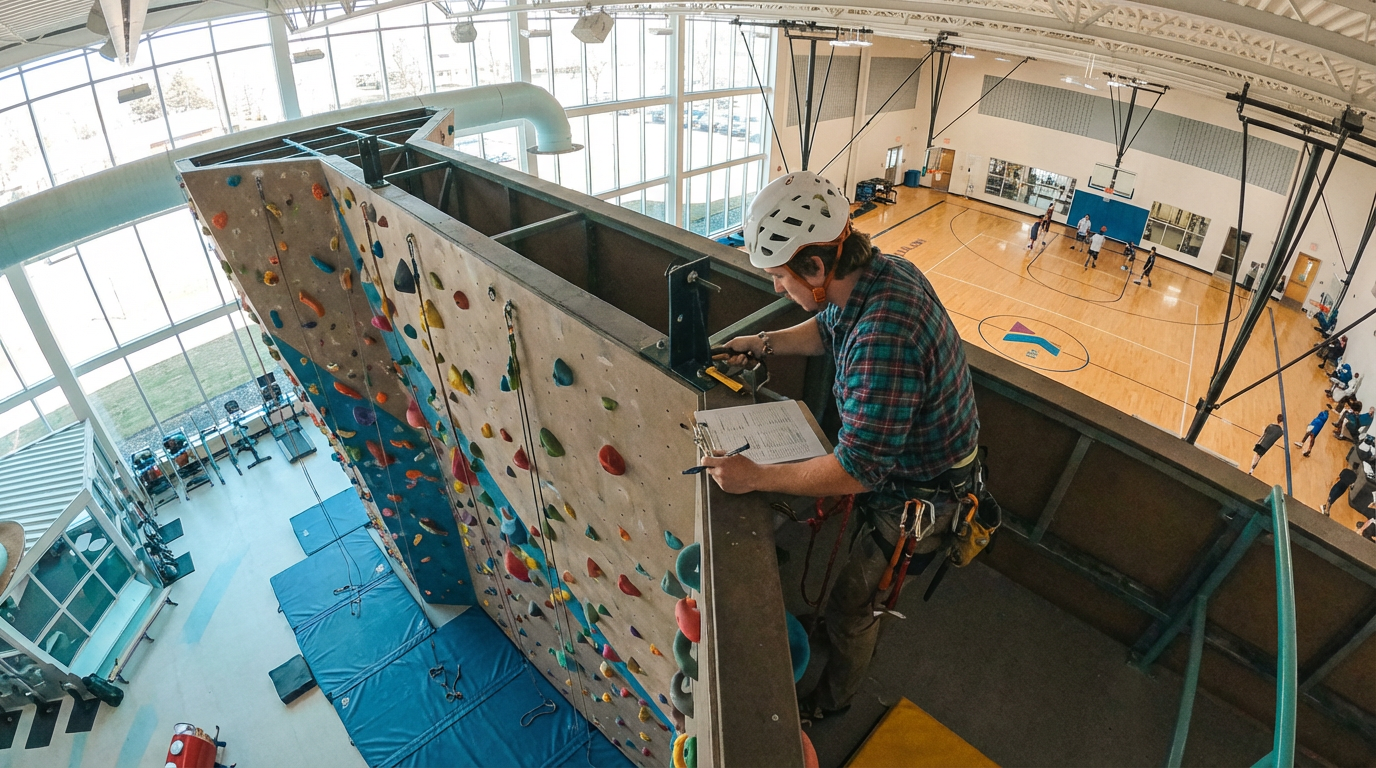
Facility Inspections & Performance Assessments
Clear, third-party evaluations for climbing walls, artificial terrain, and adventure environments.
THE INDUSTY PROBLEM
Artificial terrain systems quietly degrade over time. Small issues become expensive failures when they go unseen.
Nolterra inspections provide clear third-party insight into condition, maintenance priorities, operational concerns, and long-term asset performance; helping owners make informed decisions before problems compound.
WHAT WE INSPECT
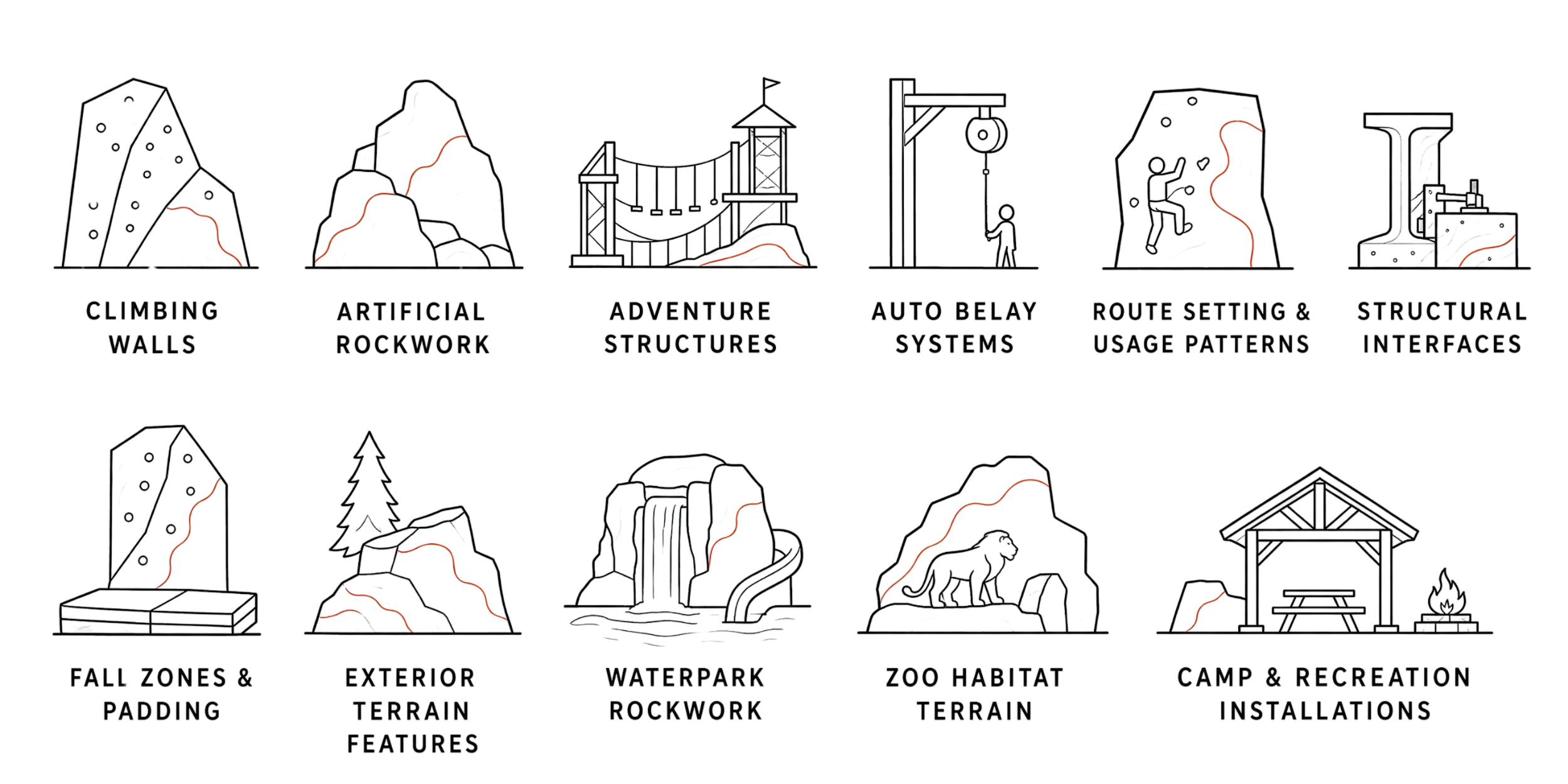
We work with climbing facilities, recreation centers, universities, camps, adventure parks, zoos, themed environments, municipalities, and specialty terrain installations across North America.
WHAT YOU RECEIVE
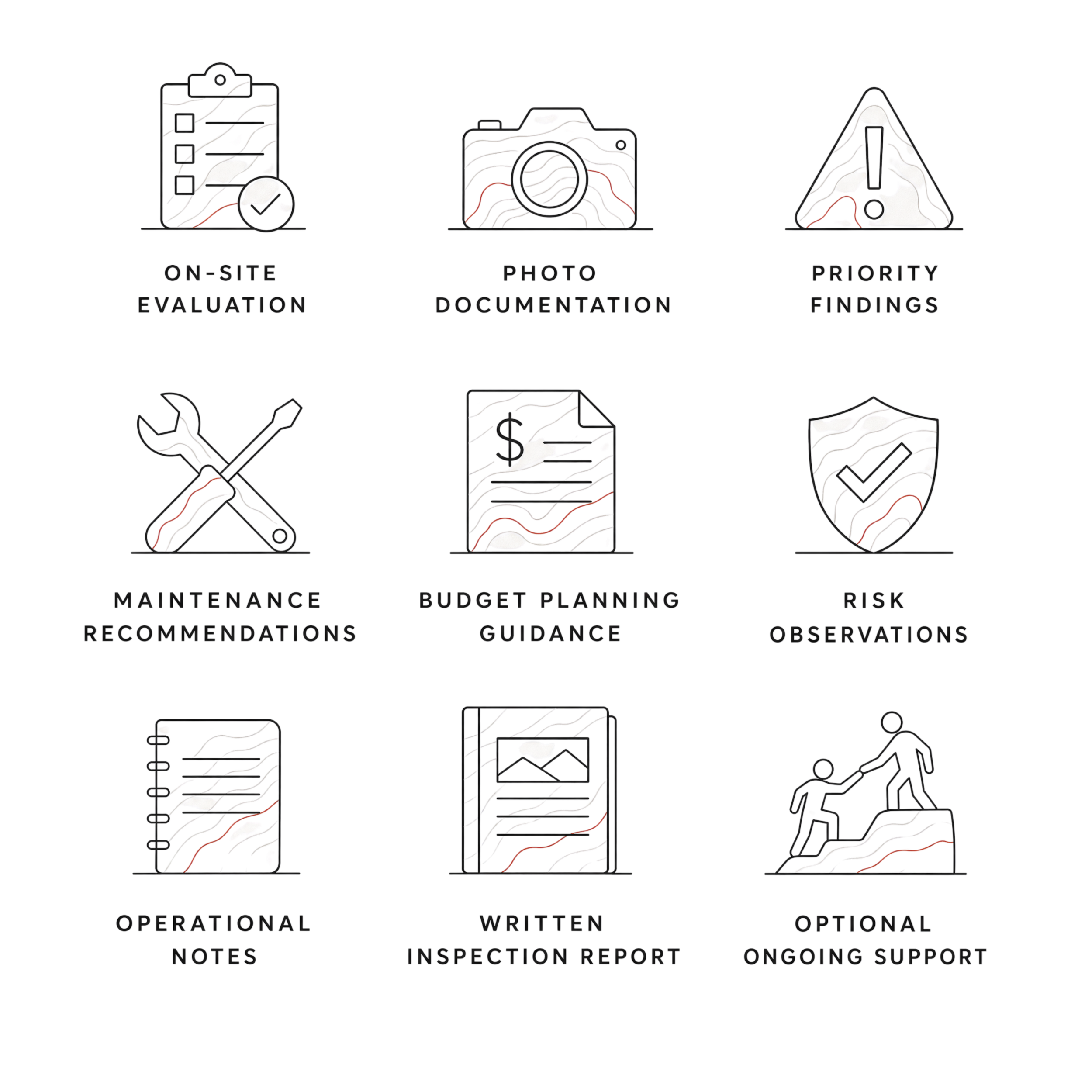
You receive a comprehensive written inspection report supported by on-site evaluation, photo documentation, operational observations, and terrain performance analysis. Reports help climbing gyms, recreation centers, universities, camps, municipalities, zoos, and adventure facilities better understand the condition, maintenance needs, and long-term performance of their climbing walls, artificial rockwork, and terrain environments.
Deliverables include photo documentation, priority findings, maintenance recommendations, risk observations, operational notes, repair considerations, and budget planning guidance. We also evaluate operational wear, user behavior, maintenance accessibility, environmental exposure, and lifecycle performance to better understand how the environment is functioning in real-world conditions.
The final report is designed to support safe operation, informed decision-making, proactive maintenance planning, and long-term terrain performance. Optional ongoing support and follow-up consultation are also available as needed.
PROCESS
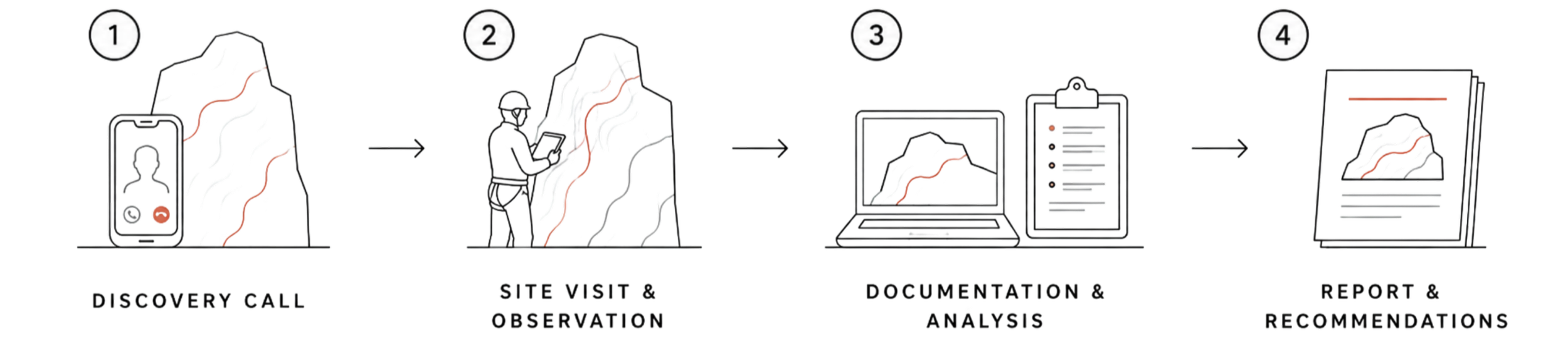
The process begins with a Discovery Call to understand the facility, terrain system, operational concerns, and project goals. This helps establish the scope for climbing wall inspections, artificial rockwork evaluation, maintenance planning, and lifecycle performance review.
Next is the Site Visit & Observation phase, where we assess terrain condition, operational wear, user behavior, maintenance accessibility, structural interfaces, route setting patterns, and environmental interaction within real-world operating conditions.
Following the visit, we move into Documentation & Analysis. Observations are organized into a detailed evaluation of maintenance priorities, operational performance, lifecycle concerns, safety considerations, and long-term durability.
The process concludes with a Report & Recommendations outlining observed conditions, priority issues, maintenance considerations, and practical next steps to support safe operation, informed budgeting, repair planning, and long-term terrain performance.
DIFFERENCE BETWEEN ENGINEERING & NOLTERRA
Most companies focus simply on surface conditions.
Nolterra helps owners and operators evaluate terrain performance, maintenance complexity, environmental exposure, repair accessibility, and long-term operational sustainability
-
Artificial terrain systems do not age evenly. Wear patterns develop based on staffing practices, traffic concentration, route-setting habits, environmental exposure, cleaning procedures, and user behavior. High-touch areas polish differently. Entry points degrade faster. Hardware access zones become maintenance bottlenecks. Padding compression changes circulation patterns.
Operational wear is not theoretical deterioration. It is the physical record of how a facility is truly functioning.
Understanding operational wear allows owners to prioritize maintenance intelligently instead of reactively.
-
People rarely use environments the way designers originally intended.
Guests cluster in predictable areas. Children create unintended circulation paths. Staff naturally favor efficient reset patterns. Climbers avoid intimidating terrain. Certain walls become social spaces while others become dead zones.
Over time, user behavior reshapes facility performance far more than initial design intent.
Nolterra studies how people actually move through terrain environments and how those behaviors influence safety, maintenance, congestion, programming success, and long-term usability.
-
Most terrain systems are designed to be built.
Very few are designed to be maintained.
Access limitations, hidden hardware, difficult repair sequencing, inconsistent materials, lift constraints, shutdown requirements, and staffing limitations all influence whether maintenance actually happens. Theoretical maintenance plans often collapse under operational reality.
Nolterra evaluates environments through the lens of practical ownership, not idealized specification sheets.
-
A climbing wall, adventure environment, or themed terrain system only succeeds if it aligns with the operational goals of the facility using it.
Programming alignment examines whether terrain supports:
staffing capabilities
throughput requirements
user demographics
event flexibility
instructional models
membership engagement
seasonal usage
operational bandwidth
A technically impressive installation can still underperform operationally.
Nolterra helps owners understand whether their environment supports the experience they are actually trying to deliver.
-
Maintenance deferred is often maintenance inaccessible.
If repairs require excessive shutdowns, specialized lifts, difficult access sequencing, outside vendors, or disruptive operational impacts, small issues compound into major failures.
Repair accessibility directly influences lifecycle cost.
Nolterra evaluates how easily terrain systems can realistically be inspected, maintained, resurfaced, repaired, modified, and operationally supported over time.
-
Most environments are evaluated at completion.
Very few are evaluated five, ten, or fifteen years later.
Lifecycle performance examines how environments evolve under real operational conditions:
material aging
environmental exposure
usage intensity
staffing turnover
evolving programming
deferred maintenance
changing user expectations
The goal is not simply to keep environments standing.
The goal is to keep them functional, relevant, safe, maintainable, and operationally valuable throughout their lifespan.
-
Artificial terrain never exists in isolation.
Rockwork interacts with water systems, landscaping, guest circulation, lighting, drainage, weather exposure, acoustics, maintenance equipment, staffing visibility, and adjacent architecture. Climbing environments interact with supervision models, spectator zones, route-setting workflows, and operational logistics.
Most problems emerge at interfaces.
Nolterra focuses heavily on these interaction zones because they are often where operational friction, accelerated wear, maintenance inefficiency, and user experience failures originate.